British Library acquires the Ronald Blythe archive
The archives of writer and essayist Ronald Blythe join the British Library's collections.
16 January 2026The archives of writer and essayist Ronald Blythe join the British Library's collections.
16 January 2026Blog series English and drama
Author Helen Melody, Lead Curator of Contemporary Literary and Creative Archives

Image of Blythe © Ronald Blythe Archive
Ronald Blythe’s work explores aspects of nature, place and memory, painting a picture of England in the 20th century. His best-known book Akenfield, is a portrait of changing rural life in Suffolk during the 20th century. The book reflects on the ‘glory and the bitterness’ of rural life providing a poignant insight into the rural poverty that Blythe himself experienced. Akenfield received critical acclaim internationally and Blythe later worked on a film adaptation of the book with Suffolk born director, Peter Hall. Blythe’s other books included his first novel, A Treasonable Growth (1960) inspired by E.M. Forster and The View of Winter (1979) in which he examined how the elderly were treated by a society that did not value them.
Although Blythe lived all his life in Suffolk and Essex he moved in literary and artistic circles with contemporaries including Christine and John Nash, Benjamin Britten, James Turner and Patricia Highsmith. Christine Nash, who first met Blythe when he was a Reference Librarian in Colchester, encouraged him to pursue a literary career and she and her husband became particularly close to Blythe, who later moved into their home to take care of John Nash following his wife’s death.
Blythe’s circle widened further when he helped to organise the Aldeburgh Festival in the 1950s with Imogen Holst. A lifelong Anglican, Blythe became a lay reader in 1984. In 1993 he began writing a weekly column for The Church Times entitled ‘Word from Wormingford’ which brought him to the attention of a new audience.
It was Ronald Blythe’s wish that his archive should be given to the British Library after his death and we are very grateful to him and his executors for this generous donation. The archive contains a wide range of material including literary drafts, research notes, notebooks, correspondence, press cuttings and photographs. Such a wide range of contextual material provides a fascinating insight into Blythe’s life and work, and particularly his creative process.
People sometimes imagine that a writer’s ideas come to them fully formed; however, archives show the huge amount of research that goes into creative writing. Blythe’s archive includes a wealth of material relating to his work including notecards on which he recorded the people whom he spoke to whilst researching Akenfield, correspondence with the Ministry of Agriculture, Fisheries and Food about livestock and farming figures and a wealth of notes about farming practice that he had collected. There are also a large number of exercise books in which Blythe wrote his research notes, his literary drafts, talks and lists on different subjects. Correspondence illustrates the circles in which Blythe moved and also sheds light on friends and contemporaries including the American writer, Patricia Highsmith.
Letters from Highsmith written between 1963 and 1993 provide a real insight into both writers and show a softer side to her than is usually seen.

Blyth's notebook for Ackenfield © Ronald Blythe Archive

Blyth's notes for Ackenfield © Ronald Blythe Archive
In February 2025 I was lucky enough to travel to Bottengoms, Blythe’s former home to look at the archive in situ in February 2025. It was a privilege to view the archive in situ in Blythe’s former study, much of the archive was stored in a large cupboard, arranged in labelled brown envelopes and manila files, with correspondence in a filing cabinet and a wooden tea chest. It was well organised which could in part be attributed to Blythe’s early work at the library in Colchester.
Indeed, Bottengoms itself was fascinating. The 16th-century yeoman farmer’s house, which is near Wormingford in the Stour Valley once belonged to the artists, John and Christine Nash. Blythe left the house to the Essex Wildlife Trust in his will with the wish that it should become a nature reserve and include working space for writers, artists, photographers, natural historians and historians.

Blythe's study
Blythe’s archive will be a wonderful resource for researchers interested in the natural world and societal change in England during the 20th century with a particular focus on rural life and the upheaval after WW1. Anyone who would like to learn more about Blythe’s life and work, and his wonderful archive may also be interested in an event, which will be held at the British Library on Monday 23 February. Speakers will include Ian Collins and Jenny Hall and the event will be chaired by Patrick Barkham. Find out more about the event and buy tickets.
For any enquiries about the archive, please contact helen.melody@bl.uk.
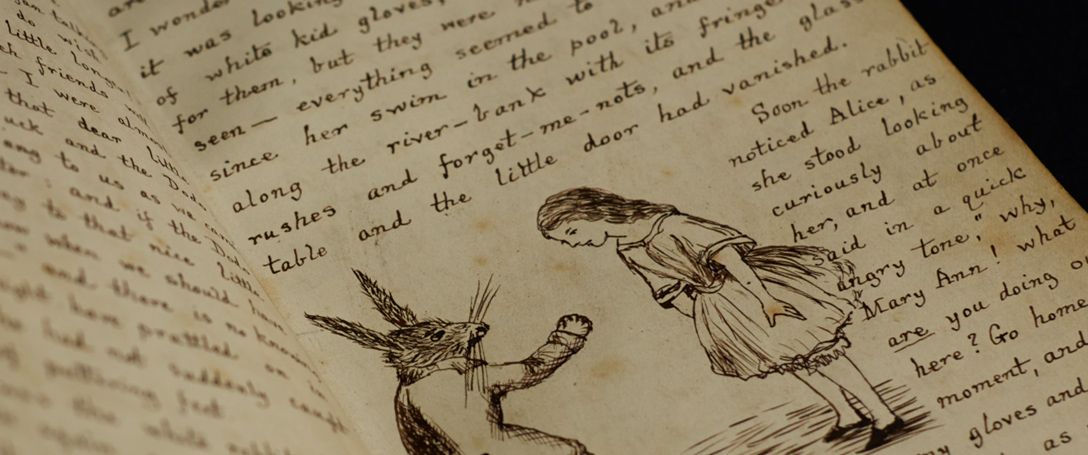
Discover more about our literature and theatre collection from the 16th century to the present day.
Explore the British Library's collection of over 170 million items, such as books, manuscripts, newspapers, maps, sound recordings, photographs and digital resources