Curating in the crossfire: collecting in the time of war and crisis
From Cold War exchanges to documenting modern conflicts in Ukraine and Gaza, our recent conference examined historical and contemporary initiatives aimed at preserving diverse materials and heritage sites at risk of loss or destruction.
5 December 2025
Blog series European studies
Author Ben Hadley, Subject Librarian (Social Sciences), Content Strategy and Services
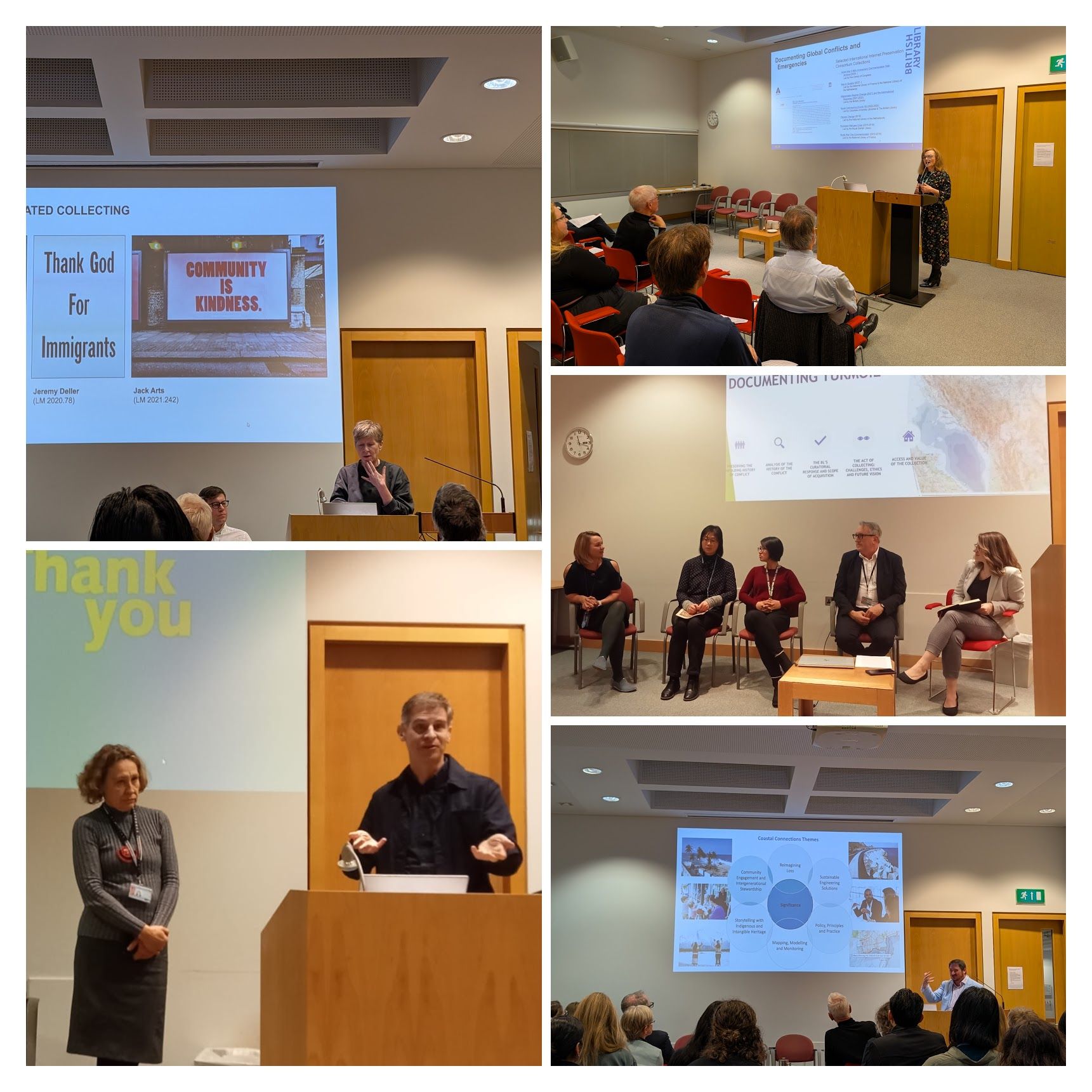
From 3-4 November, our East European curators hosted a conference on preserving and disseminating cultural knowledge during conflicts, crises and emergencies.
One of the aims of libraries, archives and museums is to collect and preserve documents that represent the cultural values and knowledge of communities that are under threat.
In recent years the COVID pandemic and natural disasters have presented a significant challenges to curators. Wars in Gaza and Ukraine, conflict in Syria, Sudan and Sub-Saharan Africa have forced museum professionals to respond to challenging circumstances and use innovative methods to preserve and protect fragile objects.
In his keynote lecture former Head of Collections Kristian Jensen provided a context for collecting materials from conflict zones and reflected on historical acts that influence the work of museum professionals. In 1954 The Hague Convention specified its aim to protect monuments, archaeological sites, works of art, manuscripts, books and scientific collections. Kristian explained how curatorial decisions are underpinned by the convention and why it is important that curators are aware of legislative acts when acquiring cultural property from other countries.
The Endangered Archives Programme (EAP) seeks to preserve cultural heritage and make it available to as wide an audience as possible. To achieve this we provide grants from applicants to digitise and document archives. ‘Endangered’ means material that is at risk of loss or decay and is in countries where resources and opportunities to preserve such material are lacking or limited. Dr Sam van Schaik spoke in detail about initiatives in Ukraine, Sudan and Gaza.
Highlights from the conference sessions.
In 2019 the Imperial War Museum (IWM) presented an exhibition ‘Culture Under Attack’ which explored how buildings of cultural value were targeted in WW2 bombing raids in the UK. Gary Winter provided an insight into the National Building Record (NBR) which was set up to record architecture that was under threat of destruction. He described the difficulties and dangers faced by members of the unit as they struggled to produce a photographic record of buildings throughout the UK. Christchurch Cathedral in Canterbury, The Corn Exchange in Leeds, and Ford’s hospital, a 16th century almshouse were all recorded for posterity.
Tamsin Silvey, Cultural Programme Curator at Historic England also contributed to the ‘What Remains’ segment of the IWM exhibition and gave a lecture at the conference on the Picturing Lockdown collection. On 29 April 2020 she asked the UK public to document their experiences during the Covid-19 pandemic. The call out aimed to spark conversations about identity and the results were collected by Historic England to form a unique record of this extraordinary moment in history. Tamsin talked about the challenges of crowdsourcing this archive and echoed the observations of Nichola Bingham, Web Archive Curator, who stressed the need for agile responses when archiving the nation’s history in real time.
Beatrice Behlen, Senior Curator at the London Museum also engaged with a rapid-response approach to archiving physical and digital objects with her record of the experiences of Londoners during lockdown. Collating a wide range of experiences Beatrice included tangible objects, social media posts and recorded the everyday anxieties of contributors. Innovative approaches reflect a need to adopt novel methods when archiving life in the 21st century.
Natalia Yemchenko spoke about collecting stories during the war in Ukraine and the importance of recording memories of survivors. The Museum of Civilian Voices archives their experience and provides a therapeutic outlet for those affected by conflict. This collection exists entirely online and reflects the view that museums can be spaces for communities to reflect, collaborate and nurture relationships.
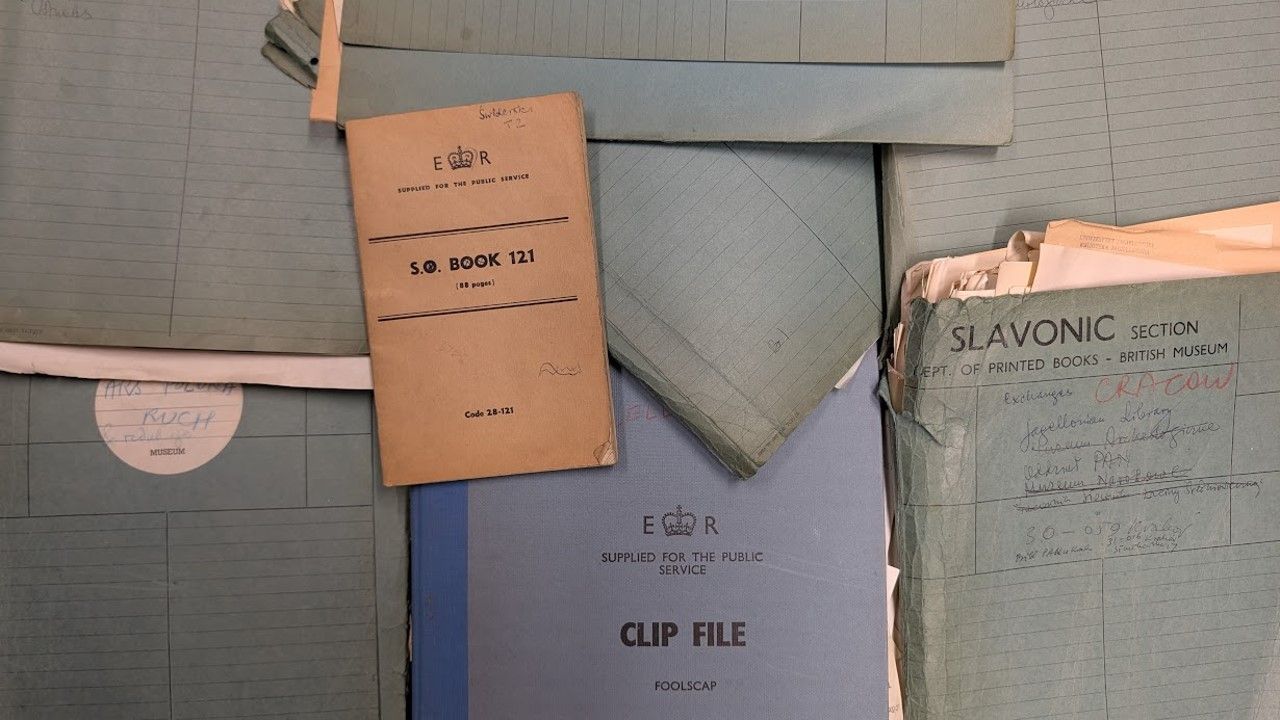
The conference represented a broad cross section of our collection areas and included discussions with Alison Bailey, Lead Curator of Printed Heritage Collections who presented on First World War ephemera, Han-Lin Hsieh, Curator of Chinese collections who spoke about Sion-Japanese war propaganda prints, and Richard Morel, Curator of Philatelic Collections who presented on philatelic communities during wartime, Olga Topol, Curator of Slavonic and East European Collections, reflected on building the British Library’s Polish collection through exchanges during the Cold War, and Milan Grba discussed the Library’s curatorial response to the Yugoslav Civil Wars.
Files originating from the British Museum's Slavonic Section of the Department of Printed Books, containing material used to bypass restrictions and keep knowledge flowing across the Iron Curtain.
The event was well attended and provided an opportunity for the public to understand the broad reach of our curatorial work throughout the world.
European studies series
This blog is part of our European Studies blog series, promoting the work of our curators, recent acquisitions, digitisation projects, and collaborative projects outside the Library.
Our blogs explore the British Library's extraordinarily diverse collections of material from all over the continent – from Greece to Finland and from France to Georgia, and everywhere in between.