Skip to content

The British Newspaper Archive reaches 100 million pages

This week the British Newspaper Archive hits the milestone of 100 million digitised pages. We in the British Library news team are celebrating this achievement and our long partnership with Find My Past by picking a few highlights from the BNA.

19 February 2026

Blog series Newsroom

Author Claire O'Halloran, Curator Newspaper Collections

Daily Mirror

Looking through the BNA’s run of the Daily Mirror, from its inception in 1903 up to 2000, we can chart the evolution of a national newspaper throughout the 20th century. The below example comes from the paper’s early years, when it was The Daily Illustrated Mirror. During this period, the Mirror emphasised its pictorial content and its appeal to both male and female audiences. This is an early example of photography in newspapers, depicting the funeral procession of the Duke of Cambridge in March 1904.

The below later example from October 1999 demonstrates how the tabloid’s front page changed configuration over time. While the pictorial focus remains, it is now accompanied by a large headline featuring word play, and a firm editorial statement of the Mirror’s stance in the euro debate.

Front page of the Mirror, featuring the headline “Take us to Euro leader” and a colour photograph of (l-r) Michael Heseltine, Tony Blair, and Kenneth Clarke.

'TAKE US TO EURO LEADER'. Front page headline from The Mirror, 15 October 1999, p.1 (registration required).

The Mirror (Trinidad and Tobago)

An unrelated newspaper also named The Mirror, published in Port of Spain, Trinidad and Tobago, offers an insight into the experiences of soldiers of the British West Indies Regiment (BWIR) during the First World War. The BWIR was formed in 1915 and comprised of volunteers from British colonies across the Caribbean. The conditions faced by the soldiers when they first arrived at training camp in Seaford, East Sussex in late 1915 are described in several articles, including the below: 'That first night was awful and the men suffered dreadfully from cold and shivers.'

Text reads: 'The cold seems to paralize them. The Verdalla's Contingent arrived on the 4th October and reached Seaford at 9 o'clock at night. The weather was cold and windy — it nearly cut the marrow out of one's bones. They got a spanking hot meal and were served out with three blankets each and sent to the huts. There were no fires in the huts and the buildings would charm the anti-tuberculosis folk, The wind comes in everywhere — baskets would keep the draught out better. That first night was awful and the men suffered dreadfully from cold and shivers. Drills began at once —'

Article extract above reads: 'The cold seems to paralize them. The Verdalla's Contingent arrived on the 4th October and reached Seaford at 9 o'clock at night. The weather was cold and windy — it nearly cut the marrow out of one's bones. They got a spanking hot meal and were served out with three blankets each and sent to the huts. There were no fires in the huts and the buildings would charm the anti-tuberculosis folk, The wind comes in everywhere — baskets would keep the draught out better. That first night was awful and the men suffered dreadfully from cold and shivers. Drills began at once —'

Hints of conflict and discontent also come through in this newspaper. In January 1916, it published a letter from Col. Barchard, Officer in Command of the BWIR (registration required), refuting claims made by soldiers that they were not fed and clothed to the same standard as their British counterparts.

The Lady’s Newspaper

The Lady’s Newspaper (1847-1863) was one of the earliest newspapers produced for an exclusively female audience. It included all the items you would expect in a 19th century women’s magazine, such as features on London and Paris fashion; needlework patterns; book and theatre reviews; and serialised fiction. However, these appeared alongside surprisingly graphic accounts of wars and imperial uprisings, as well as in-depth political analysis and articles on current events. Below is an illustration of the Battle of the Alma from October 1854.

The Lady’s Newspaper was a revolutionary step forward in women’s publishing. It was digitised as part of the British Library’s Heritage Made Digital (HMD) Newspaper project and is free to view on the BNA.

The East Wind

The East Wind (1875-1876) is a great example of the treasures that can be found in the most hyperlocal and short-lived of newspapers. The East Wind catered to readers in neighbourhoods of east London. On more than one occasion, the paper defended the value and integrity of local journalism. In its second issue (registration required), it contested Charles Dickens’s famous satire of the parochial nature of local journals and argued that local newspapers were a powerful means of testing and improving community institutions. In another issue, the paper responded to a reader’s criticism of an unfavourable review of a piano recital published the previous week. It defended the right of local newspapers to 'hold an independent opinion, with the liberty of expressing it'. The East Wind was also part of the HMD project and is free to view on the BNA.

'Underneath all this lies the question whether a local newspaper is to be allowed to hold an independent opinion, with the liberty of expressing it, or whether it is simply to distribute, indiscriminately, praise according to the estimate people may form of their own desers. If the latter,...'

Article extract above reads: 'Underneath all this lies the question whether a local newspaper is to be allowed to hold an independent opinion, with the liberty of expressing it, or whether it is simply to distribute, indiscriminately, praise according to the estimate people may form of their own deserts. If the latter,...'

Freeman’s Journal

As well as reporting on the news, occasionally newspapers themselves become the story. This is exactly what happened to Irish constitutional nationalist title, the Freeman’s Journal, in the build up to the Irish Civil War. In March 1922, the Journal’s offices were raided and its printing presses destroyed by IRA forces due to the publication’s support for the Anglo-Irish Treaty. It continued to publish in a smaller format throughout April and harshly criticised the anti-Treaty forces for attempting to 'kill the freedom of the Press.'

Headline from the Freeman’s Journal. Headline reads “Cowardly outrage: Wrecking of Freeman property".

'COWARDLY OUTRAGE: WRECKING OF FREEMAN PROPERTY'. Headline from Freeman’s Journal, 01 April 1922, p.2 (registration required).

The digitised images available on the BNA allow us to track changes to this newspaper’s format during this tumultuous period. On 22 April 1922, the Journal resumed its usual broadsheet size, and reported on its ordeal under this triumphant headline:

Headline from the Freeman's Journal, Saturday 4 April 1922 "How The Freeman's Journal Refused To Be Suppressed".

'How The Freeman's Journal Refused To Be Suppressed'. Headline from Freeman’s Journal, 22 April 1922, p.19 (registration required).

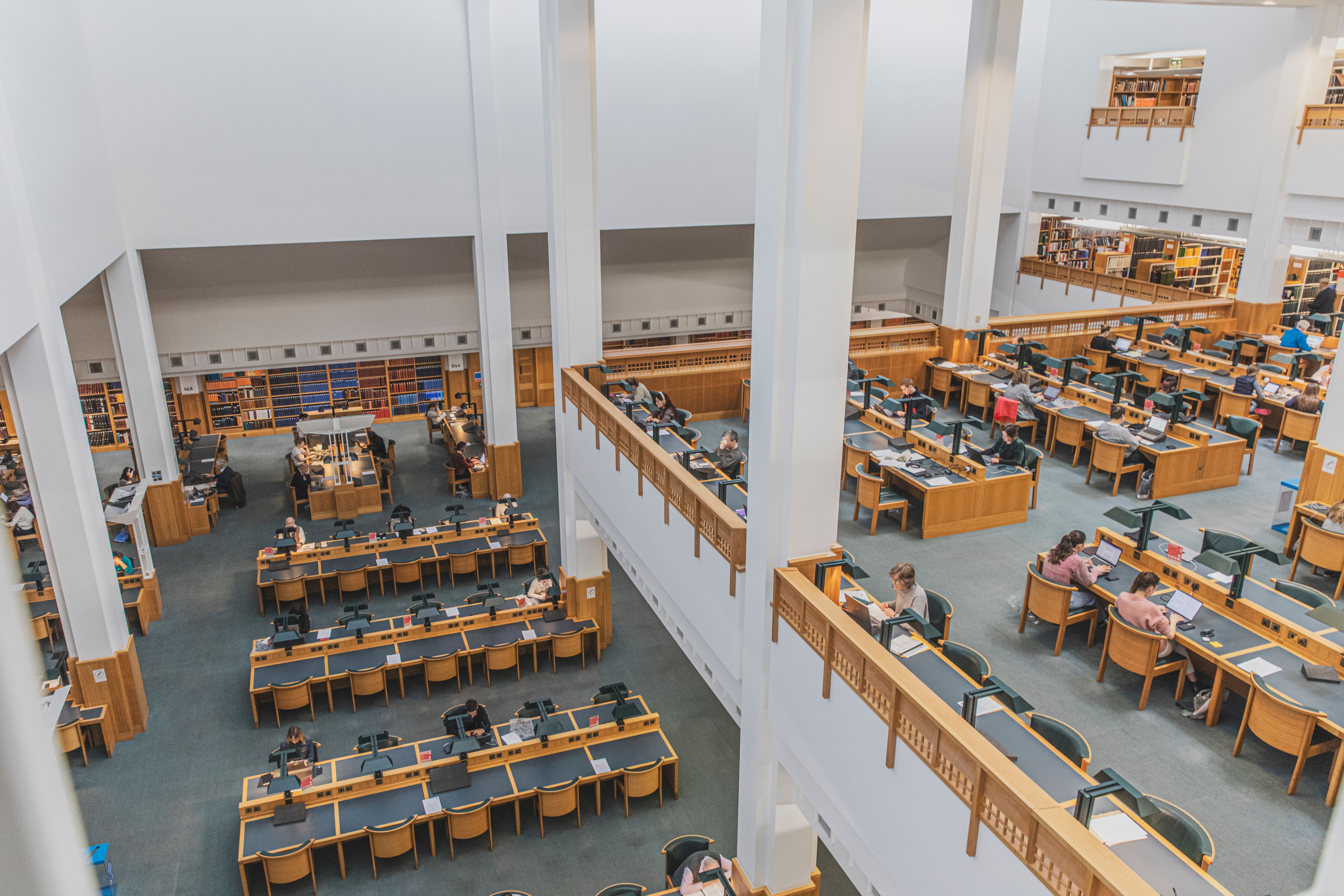
All BNA content is free to view at the British Library for Registered Readers using the computers in our Reading Rooms. You can also access the BNA in many public libraries around the country for free. Use LibraryOn’s interactive map to find your nearest library with access.

Composite of desks, computers and newspaper front page.

Newsroom series

This blog post is part of our Newsroom series, exploring the British Library's news archives. Our collection of UK, Irish and world newspapers includes over 60 million issues, from the 17th century to the present day, and we have growing collections of television, radio and web news.

The Newsroom series is written by our news and media curators, and news reference staff. It also features occasional posts from guest authors.

The British Newspaper Archive reaches 100 million pages