The Moutier-Grandval Bible loaned to Jura
Our loan of a monumental manuscript to the Musée Jurassien d'Art et d'Histoire in Delémont, Switzerland attracted great press attention.
29 March 2025Our loan of a monumental manuscript to the Musée Jurassien d'Art et d'Histoire in Delémont, Switzerland attracted great press attention.
29 March 2025Blog series Medieval manuscripts
The British Library has loaned the Moutier-Grandval Bible to the Musée Jurassien d'Art et d'Histoire in Delémont, Switzerland. This enormous manuscript of the whole Bible was made in the scriptorium of the abbey of St Martin in Tours in the 830s or 840s. It was subsequently held at the Abbey of Moutier-Grandval near Delémont in north-west Switzerland. The manuscript is celebrated for its four, spectacular, full-page illustrations. The first of these, facing the opening of the book of Genesis, in on display in Delémont.

The page facing the opening of the Book of Genesis, from the Moutier-Grandval Bible (Tours, France, c. 830–c. 840): Add MS 10546, f. 5v.
The illustration on the above page is a narrative sequence in four panels. The scenes depict events described in the second and third chapters of Genesis: the Creation of Adam and Eve; God’s warning not to eat from the Tree of Knowledge; the Temptation and Fall; the Expulsion of Adam and Eve from Eden; and Eve suckling and Adam toiling. Within the borders of these scenes is a Latin poem written in chrysography, or gold letters, that summarises the events.
This monumental manuscript, which has 449 leaves, making 898 pages in total, weighs 22 kg. It is the work of some twenty scribes and contains the Latin text of the Bible as revised by Alcuin of York, who had been abbot at Tours from 796 until his death in 804.

The Moutier-Grandval Bible (Add MS 10546), on display at the Musée Jurassien d'Art et d'Histoire.
The exhibition includes other manuscripts and objects made in the early Middle Ages, most notably the crozier of St Germain, the first abbot of Moutier-Grandval, which dates from the 7th century.
The opening of the exhibition attracted great press attention, and both His Excellency James Squire, His Majesty’s Ambassador to Switzerland, and Federal Councillor Elisabeth Baume-Schneider spoke at the inaugural event. Radio Télévision Suisse have also made a TV documentary about the manuscript which will be broadcast in April.

Claire Breay, Head of Medieval Manuscripts, being interviewed at the press preview for the exhibition. © foto@jplienhard.ch 2025
This is not the first time that the Moutier-Grandval Bible has been on display in Delémont. In 1981, the manuscript was loaned to the Musée Jurassien d'Art et d'Histoire for three months, where it was seen by more than 30,000 visitors.
The Moutier-Grandval Bible is again on display there until 8 June 2025 and the museum has organised an extensive programme for visits by school groups to introduce a new generation to the manuscript.
There will also be a research colloquium on 9–10 May in Tramelan, organised by Mémoires d’Ici, Centre de recherche et de documentation du Jura bernois, in collaboration with the University of Geneva.
For more information on the exhibition and opening times, visit the website of the Musée Jurassien.
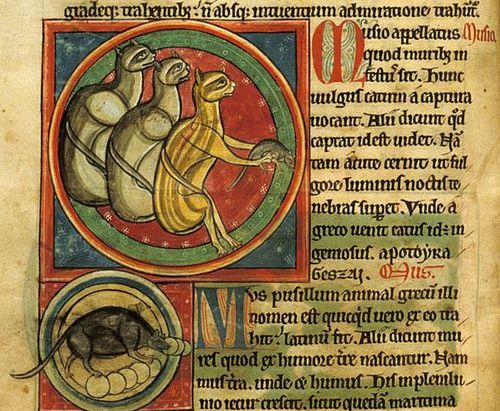
This blog is part of our Medieval manuscripts series, exploring the British Library's world-class collections of manuscripts – including papyri, medieval illuminated manuscripts and early modern state papers.
Our Ancient, Medieval and Early Modern Manuscripts series promotes the work of our curators, who are responsible for these items and thousands more.
Discover medieval historical and literary manuscripts, charters and seals, and early modern manuscripts, from Homer to the Codex Sinaiticus, from Beowulf to Chaucer, and from Magna Carta to the papers of Henry VIII and Elizabeth I.
You can access millions of collection items for free. Including books, newspapers, maps, sound recordings, photographs, patents and stamps.