The ‘perfect’ crime: loose leaves and Thomas J. Wise’s made-up books
A newly catalogued collection tells us about the illicit practices of Edwardian book collectors and dealers.
5 December 2025A newly catalogued collection tells us about the illicit practices of Edwardian book collectors and dealers.
5 December 2025Blog series English and drama
Author Francesca Cioni, Curator of Printed Heritage Collections
In a previous blog post, we introduced the bibliographic crimes of T.J. Wise. Among them were numerous thefts from British Museum Library copies of 17th-century plays: Wise tore out leaves from Museum copies to bind into his own, which he kept or sold on as ‘perfect’ specimens.
Now, as work is underway, supported by the Hidden Collections programme, to catalogue the Ashley Library, another collection has also been catalogued which may further illuminate Wise’s thefts. This is an unassuming file of loose leaves, originally acquired by a London bookseller after the death of Wise’s widow in 1939.
Many of these leaves form the missing pieces of Wise’s ‘made-up’ or ‘perfected’ volumes: some are the leaves he discarded from his own volumes, to be replaced by British Museum leaves. Some are even the stolen leaves from Museum copies themselves, which he later decided not to include in his made-up copies.
Identifying the origin of individual leaves requires careful detective work. A blueprint was laid out for this in the 1950s by D.F. Foxon and Fannie Ratchford, respectively librarians at the British Museum Library and the Harry Ransom Center in Texas, which also holds many of Wise’s made-up copies. Together, they inspected the volumes for details like distinctive patterns left by woodworm or impressions left by folds and flaws in adjacent leaves, which enabled them to match leaves in Wise’s volumes with those missing from British Museum copies. Now, using the same techniques, we can identify some of the loose stolen leaves with those in Ashley or other Library copies.
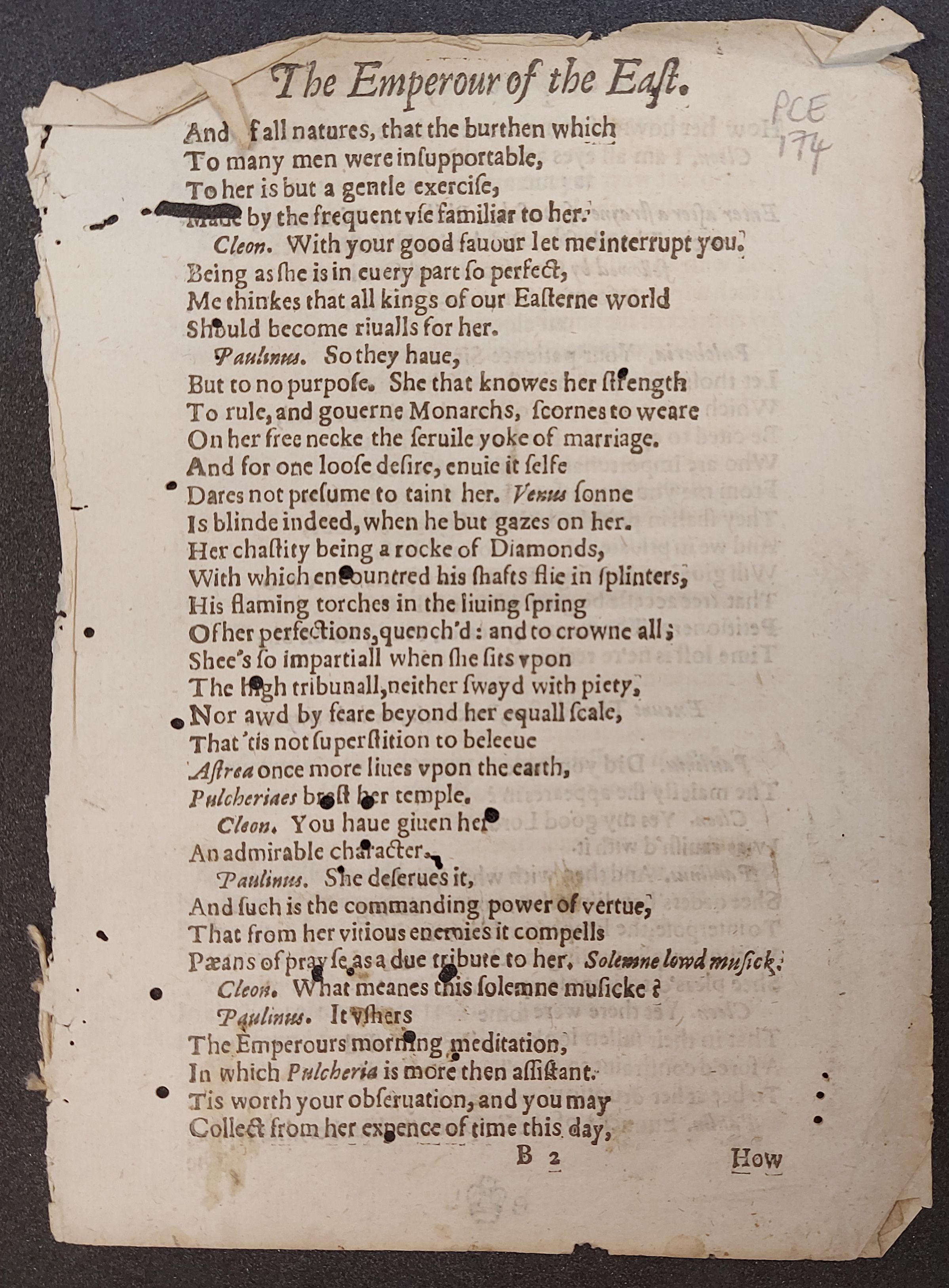
This leaf from The Emperour of the East· A Tragæ-comedie, by Philip Massinger (London, 1632) was probably selected for excision because of the extensive worm holes across the page (Ashley Add 15).
We cannot, however, identify all the leaves’ origins this way: some, among both these leaves and those in the Ashley copies, remain untraceable. This suggests that Wise’s operation was much more complex than switching leaves between two or three copies. Instead, it seems he must have acquired lots of incomplete copies or individual leaves for making-up, and many more made-up copies may remain in other collections today. The booksellers who acquired the batch of leaves had also used this collection as part of their ‘book hospital’ to perfect defective copies – and so they may also have unwittingly passed on stolen British Museum leaves.
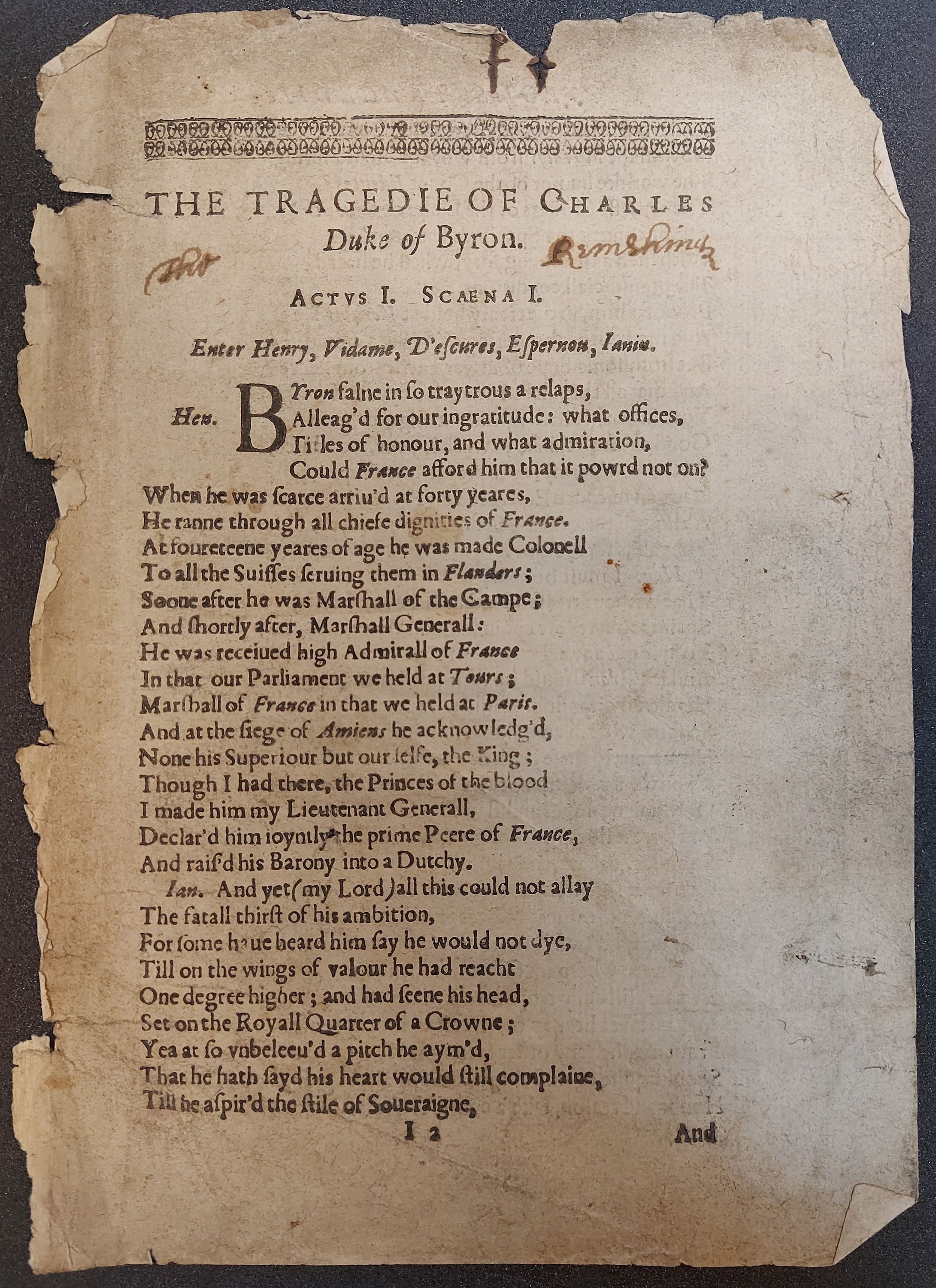
A leaf from George Chapman's The Conspiracie and Tragedie of Charles Duke of Byron (London, 1625) on which a previous owner, Thomas Remshinck, has written his name alongside the title (Ashley Add 4).
The leaves themselves are also valuable in their own right. Wise, confecting a ‘perfect’ (complete, unannotated, unstained) copy, discarded any leaves with marks – marks which often provide glimpses into the lives of the books’ early owners. One leaf discarded from a copy of William Chamberlayne’s 1658 tragicomedy Loves Victory bears its owner’s name. We don’t know anything about this ‘Monsieur Jay’ (was he perhaps one of the many Huguenot refugees who fled religious persecution in France for Britain in the 1680s?), but we do know that he cared enough for his copy of Loves Victory to name it. In ‘perfecting’ his copy, Wise erased the evidence of this care.

This leaf from Loves Victory: a Tragi-comedy by William Chamberlayne (London: E. Cotes, 1658) has the name of a previous owner, 'Monsieur Jay', written vertically in the outer margin (Ashley Add 9).
Wise’s excisions have hidden many such details from historians and bibliographers for decades. The recovery of these leaves gives us a welcome, if tantalising, hint of what we may have lost.
Arthur Freeman, ‘The Workshop of T.J. Wise’, The Times Literary Supplement no. 4146, 17 September 1982, p. 85. The Times Literary Supplement Historical Archive
D. F. Foxon, Thomas J. Wise and the pre-restoration drama: a study in theft and sophistication (London: Bibliographical Society, 1959)
Joseph Hone, The Book Forger: the true story of a literary crime that fooled the world (London: Chatto & Windus, 2024).
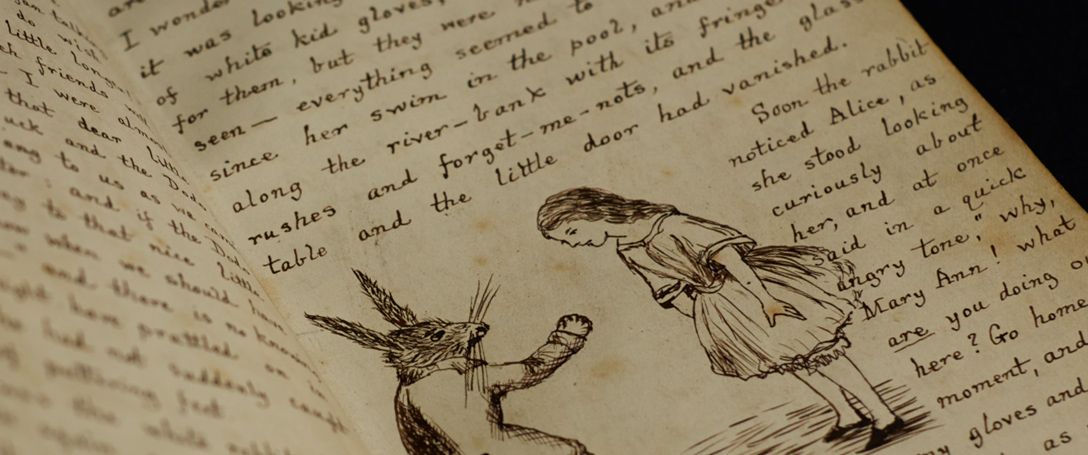
Discover more about our literature and theatre collection from the 16th century to the present day.
You can access millions of collection items for free. Including books, newspapers, maps, sound recordings, photographs, patents and stamps.