Latin American collection
Find out about our Latin American collection.
Find out about our Latin American collection.
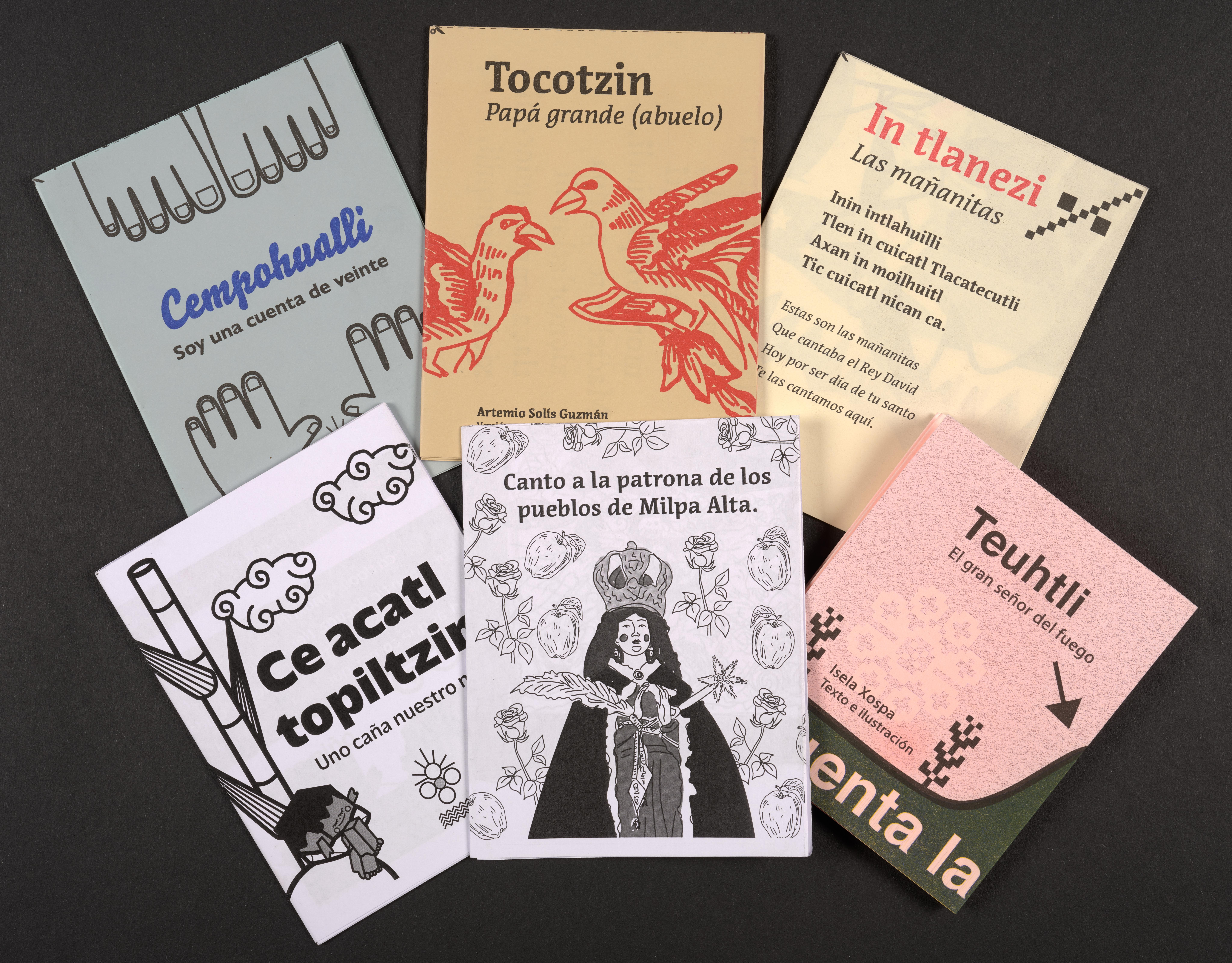
The Latin American printed collection began with the Library’s foundation as the British Museum Library in 1753 and today covers material published in 18 countries spanning the length of the continent. These are, in geographical order from North to South: Mexico, Guatemala, Belize, Honduras, El Salvador, Nicaragua, Costa Rica, Panama, Venezuela, Colombia, Brazil, Ecuador, Peru, Bolivia, Paraguay, Uruguay, Argentina and Chile.
The Library also holds material from Puerto Rico, Dominican Republica and Cuba which are part of our rich Caribbean collections. We also have a particular interest in diasporic and transnational communities, including the Latin American diaspora in the UK. The strong continent-wide focus of our collections means that we are able to support research on the interconnected histories, present and future, of Latin America, as well as country-specific interests.
Our collections include important books from the colonial period, most of them produced in Mexico and Peru. Among these are a copy of the oldest surviving book printed in Mexico – and therefore the Americas too – and three of the first four books known to have been printed in Peru. A number of these works include indigenous languages alongside Spanish – 52 of the early Mexican imprints are bilingual, largely in Nahuatl, and seven of the first Peruvian works are trilingual in Quechua and Aymara, with a further 27 bilingual works.
The collection also features a liturgical text printed in 1721 at the Jesuit mission of Loreto in what is now Argentina, as well as a 1724 Guarani-language catechism from the mission of Santa María la Mayor. Publications from the highly productive Niños Expósitos press in late 18th-century Buenos Aires are especially well represented. In addition, the collection includes rare examples of early printing from Guatemala, Chile, Ecuador and Cuba, as well as one of only three surviving copies of the first book printed in English in Spanish America. Notable early works include:
The collection is also rich in historic documents relating to Liberalism in the Americas, the wars of independence, nation building and British involvement in all these areas during the 19th century.
The Library holds significant collections of some of the earliest and most important maps of Latin America, including the 1524 Nuremberg map of Tenochtitlan [G.6885], also known as the Cortés Map. This woodcut map, originally published alongside the Latin translation of Hernán Cortés's letters to Emperor Charles V, served as the first visual encounter Europeans had with a city from the Americas.
The Bauzá Collection [Add MS 17556–17676] includes manuscript maps, charts and geographical papers relating primarily to the Spanish Americas from the late eighteenth and early nineteenth centuries. These materials offer exceptional insight into Spanish imperial cartography, scientific surveying and territorial knowledge at a moment of profound political change in Latin America.
The Hack Atlases are an important group of late 17th-century manuscript atlases associated with William Hack, a chart maker to the English Crown. Drawing heavily on captured Spanish sources and first-hand accounts from English buccaneers, the atlases focus on the Caribbean, Central America and the Pacific coast of South America. Richly illustrated and highly detailed, they document ports, coastlines and maritime routes. Perhaps the most famous is the large folio atlas titled A Waggoner of the South Sea, dedicated to King James II in 1685 [Sloane MS 44]. Other significant atlases can be found at Sloane MS 45, Harley MS 4034 and Kings MS 121.
Recordings from across Latin America can be found in our sound archive, including:
We actively collect printed material from across the region and has particularly strong collections of contemporary material from Brazil, Argentina and Mexico. In addition to academic works and contemporary literature, we focus on independent publishing, artists’ books, political ephemera and zines, as well as forms of publishing which have emerged from Latin America, namely cartonera and cordeis. Through our involvement in the Cartonera Publishing Project (2017–2019), the Library acquired cartonera from across Latin America and has particularly significant holdings of works published by Eloísa Cartonera from Argentina (the world’s first cartonera publisher), Dulcinéia Catadora from Brazil, and La Rueda Cartonera from Mexico. In addition, we have an extensive collection of artists’ book from Ediciones Vigía, the world-renowned independent publishing collective based in Matanzas, Cuba.
Spanish, Portuguese, Indigenous languages and English. Some of the Indigenous languages represented in the collection include Nahuatl, Zapotec, Quechua / Quichua / Kichwa, Guarani, and Mapudungun. This represents a snapshot of published work by Indigenous peoples in the collections, and we acknowledge that this is also only a fraction of the languages indigenous to Abya Yala.
The Library has hundreds of electronic resources and subscription databases to support your research. You can explore them in our Reading Rooms and access some of them on your own device, wherever you are.
There are also many free e-resources – including websites, full text databases, abstracting and indexing databases and other reference sources – that may be of help.
The Eccles Institute's collection guides, along with other information relating to the work of the Institute, may be found on the British Library Research Repository.