Free Things to do at the British Library: A Visitor's Guide
Explore free things to do at the British Library in London. See Magna Carta, visit the Treasures Gallery and discover displays, study spaces and more.
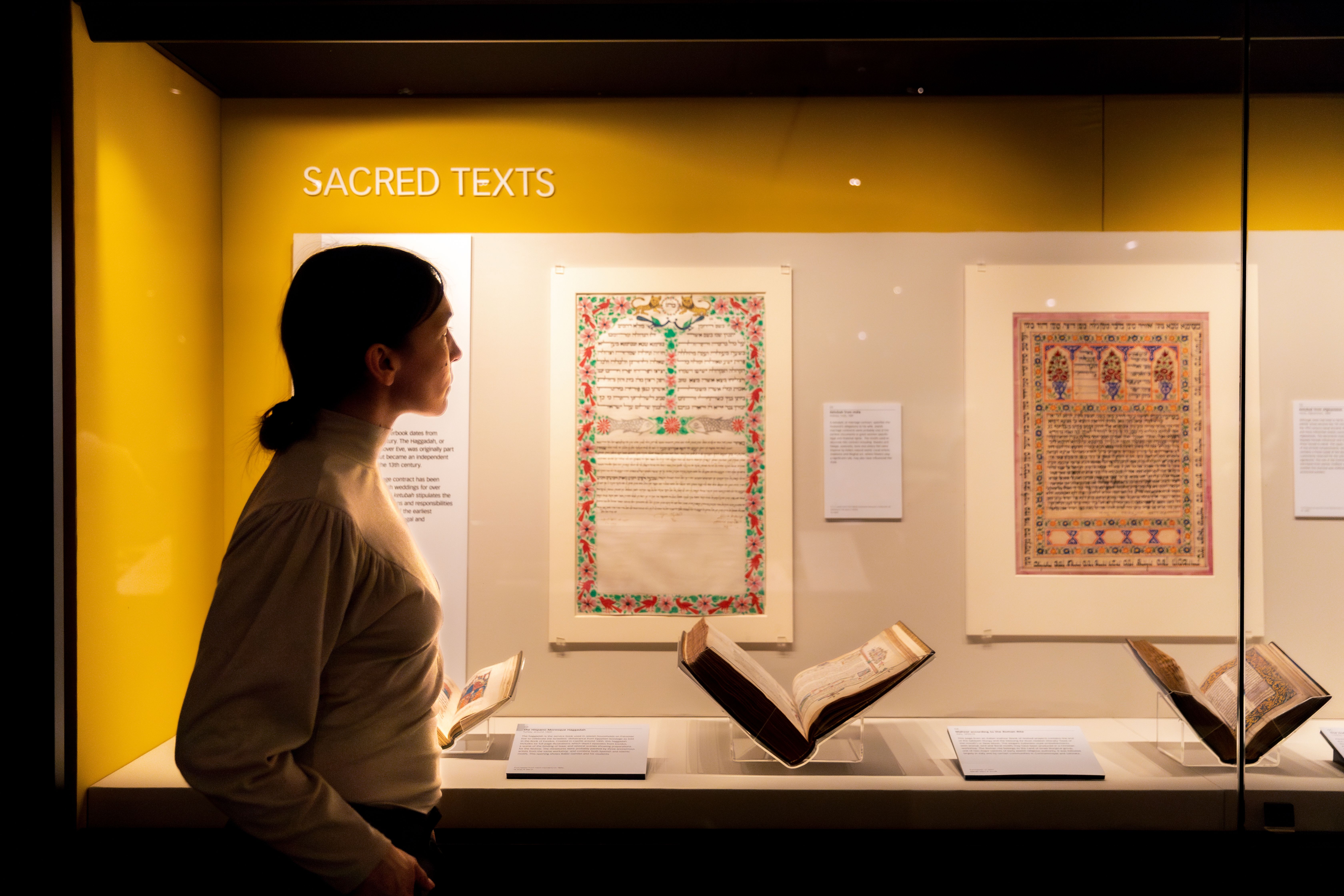
Photo by Sam Walton
Explore free things to do at the British Library in London. See Magna Carta, visit the Treasures Gallery and discover displays, study spaces and more.
Photo by Sam Walton
The British Library is free to enter seven days a week. Our permanent Treasures Gallery exhibiting some of the most exciting objects from our collection, including Magna Carta and Shakespeare’s First Folio, is also free to explore – no booking required.
Our collections include over 170 million items from almost every language and faith group. Together, they occupy over 746km of total shelving – equivalent to the distance from London to Aberdeen, and this is growing an extra 8km every year. Meanwhile our digital collections amount to over 1 petabyte – equivalent to almost 3.5 years of non-stop HD-quality video footage.
From 3,000-year-old Chinese oracle bones to today’s newspapers, our collections span the sands of time.
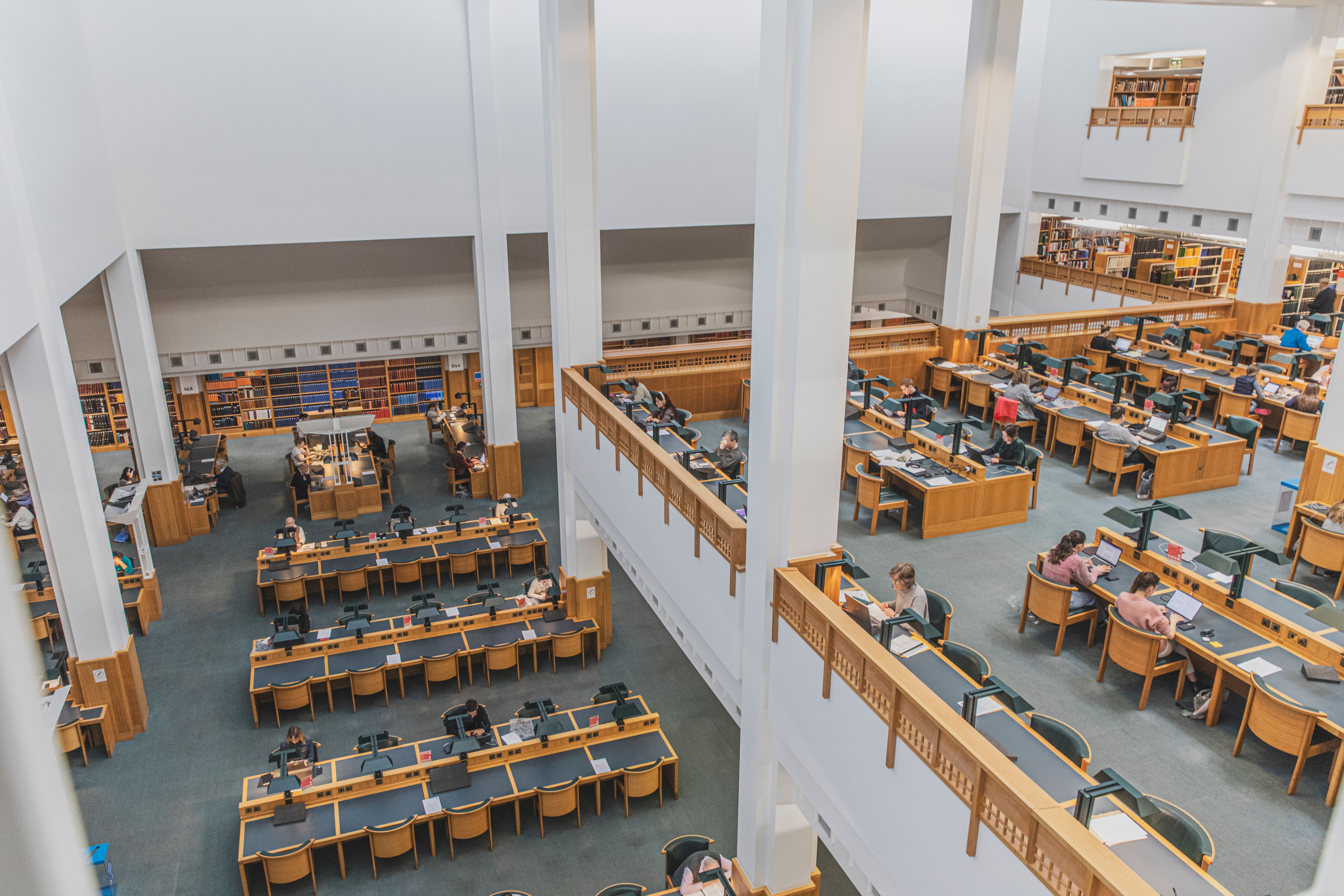
You can use our free study spaces to access our collections. Find out how.
Below are just a few of the items you can see around our London building during a visit.
Explore some of the world's most exciting, beautiful and significant books, maps and manuscripts in our free permanent gallery, open seven days a week.
Browse through cases including Literature, Art, Maps, Historical Documents, Sacred Texts and more.
Not sure where to begin? Book our Treasures Tour for a more in-depth look at the collection items on display or download our digital guide for a virtual tour around the gallery at the rest of our Grade I-listed building.
Here’s a sample of what you can see inside at the moment:

Magna Carta, 1215 (Shelfmark: Cotton MS Augustus II.106)
Magna Carta, meaning ‘The Great Charter’, is one of the most famous documents in the world.
Originally issued by King John of England (reigned 1199–1216) as a practical solution to the political crisis he faced in 1215, Magna Carta established for the first time the principle that everybody, including the king, was subject to the law.
Although nearly a third of the text was deleted or substantially rewritten within 10 years, and almost all the clauses have been repealed in modern times, Magna Carta remains a cornerstone of the British constitution.

Shelfmark: C.21.e.16
The First Folio is the first collected edition of William Shakespeare's plays, collated and published in 1623, seven years after his death. Folio editions were large and expensive books that were seen as prestige items.
Shakespeare wrote around 37 plays, 36 of which are contained in the First Folio. Most of these plays were performed in the Globe, an open-air playhouse in London built on the south bank of the Thames in 1599. As none of Shakespeare's original manuscripts survive (except, possibly, Sir Thomas More, which Shakespeare is believed to have revised a part of), we only know his work from printed editions.

The spectacles (Shelfmark: Add MS 86841/2-4) were generously donated together with Jane Austen’s desk to the British Library in 1999 by Joan Austen-Leigh, Austen’s great-great-great-niece.
This pair of tortoiseshell spectacles, along with an embroidered spectacles case, forms part of a small collection of personal items long associated with the novelist Jane Austen.
Scientific examination has revealed that the lenses are convex, or ‘plus’ lenses, which are prescribed for long-sightedness, a condition in which close-up vision is impaired. This finding aligns with several of Austen’s own letters, in which she refers to her ‘weak’ eyes and mentions difficulties with her vision, particularly when reading or writing. The spectacles would likely have aided her in many of the close-up tasks that occupied her daily life.

da Vinci’s Notebook (c. 1478–1518); Shelfmark: Arundel MS 263, ff.270v-263r
Leonardo da Vinci (1452–1519), painter, sculptor, architect and engineer, kept notes and drawings of his studies, ideas and inventions. Over 7,000 pages have survived, including this notebook, known as Codex Arundel.
The structure of the notebook reveals that it was not originally a bound volume. It was put together after Leonardo's death from loose papers of various types and sizes, some indicating Leonardo's habit of carrying smaller bundles of notes to document observations outdoors.

See one of the world’s largest atlases, the Klencke Atlas (shelfmark: Maps KAR) outside the Entrance to our Maps Reading Room on the 3rd Floor

Printing press replica (Lower Ground Floor)

Penny Black printing press (Ground Floor)
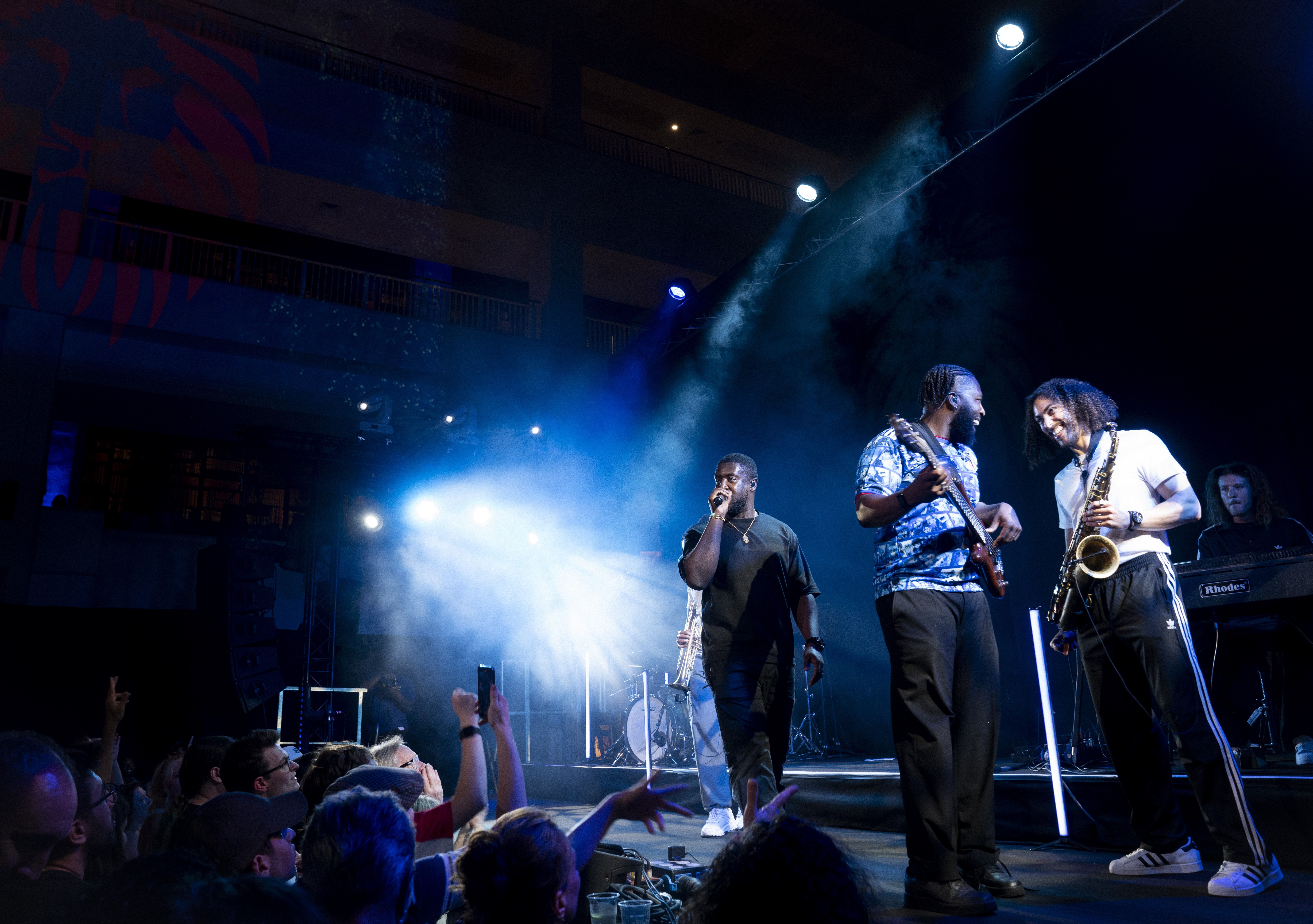
Note that some events, exhibitions and tours are charged.